Adobo is a childhood favorite I’ll never outgrow in the Philippines.
Growing up, in our household, we ate with our hands, which meant every meal was an experience you tasted from start to finish—sauce and all. No wonder I call this childhood favorite finger-lickin’ good.
This is one of the simplest Filipino dishes to cook. And if you follow my tip below (last step in the instruction), you’ll recreate the same adobo your grandma made right in your own kitchen (adobong nagmamantika).
Adobo generally has only 4 ingredients, but every region has its own spin—adding extras here and there to match a family’s taste or a cook’s personal style. Below is a comparison table to help you understand better.
| Adobo Classic Version | Modern Adobo Recipe |
|---|---|
| Pork | Pork |
| Soy Sauce | Soy Sauce |
| Vinegar | Vinegar |
| Pepper | Pepper |
| Bay Leaf (optional) | |
| Sugar (optional) | |
| Pineapple, Potatoes, Carrots, Coconut Milk, etc. (optional) |
Personally, I don’t like the strong smell of bay leaves, so I don’t use them.
But in the recipe below, I will include it; it’s up to you whether you want to add more ingredients based on the table above. The important thing is you know the basic ingredients.
Here in Saipan (abroad), there is no fresh market, hence options are limited, and everything is frozen. Before I was thawing frozen cubed pork, but after experimenting, I see no difference whether cooked, thawed, or frozen.
Cooking is an art and not an exact science. If you want your adobo sour, add more vinegar; if not, then add less. Experiment until you find the right amount that feels right for you.
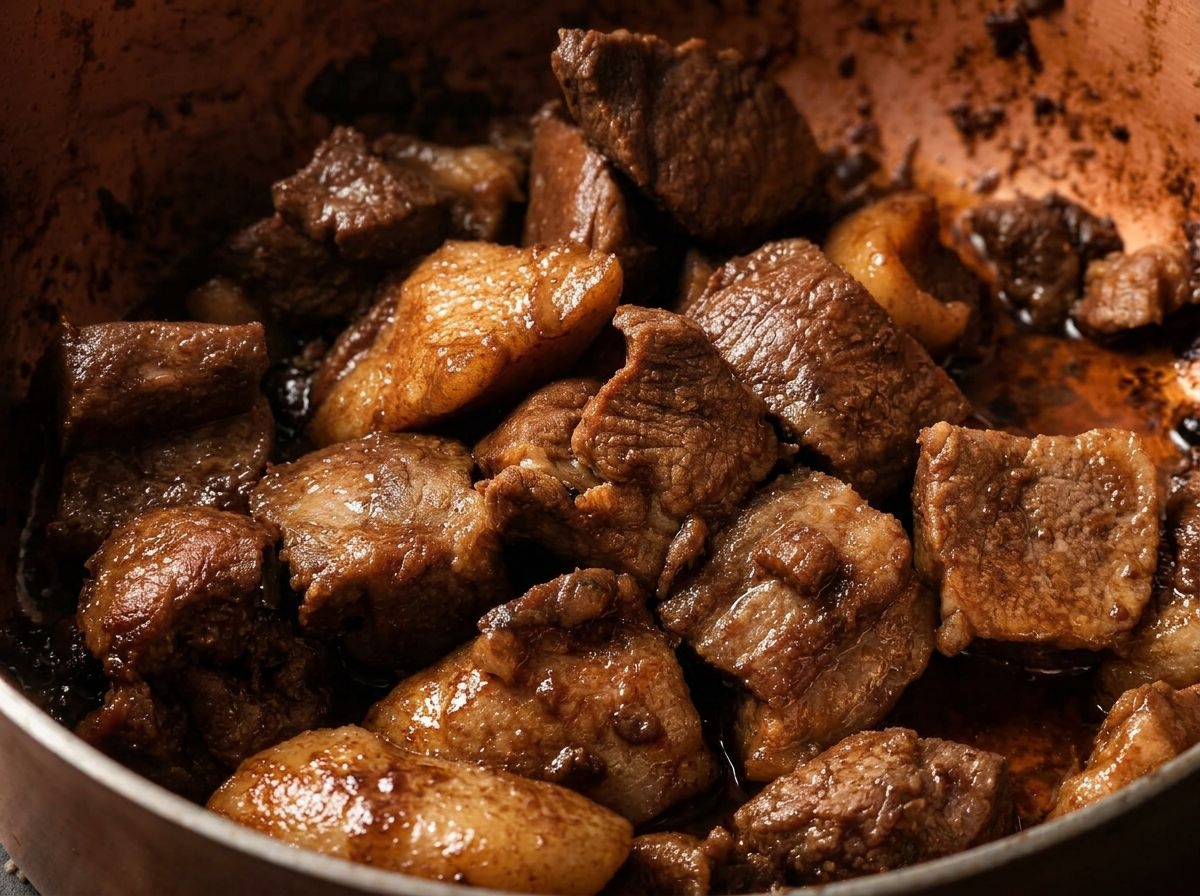
The secret to Adobong Nagmamantika, fat-rendered oil adobo, is to overcook the Adobo once the sauce thickens. The fats will be fried in their own sauce, releasing the tasty oil that pairs so well with rice.
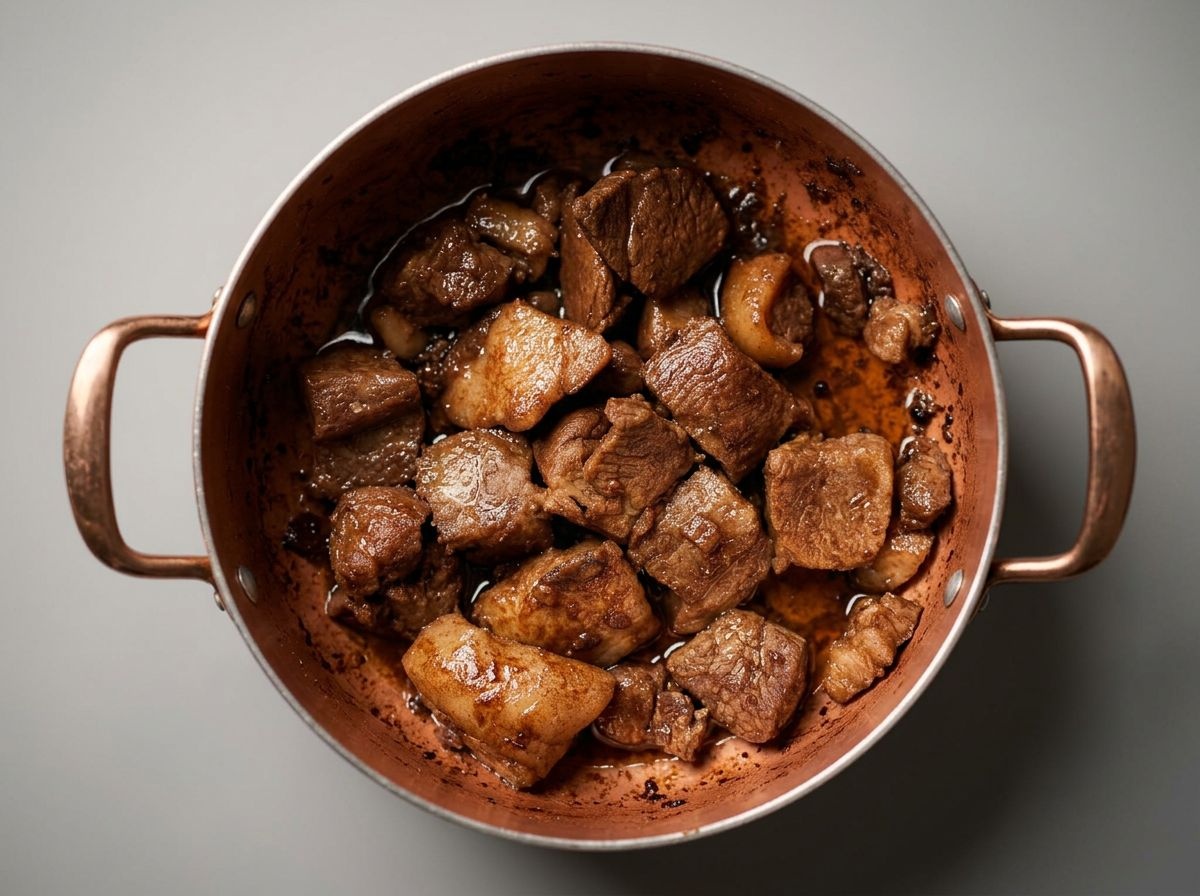

Classic Pork Adobo Recipe
Ingredients
Method
- Heat the oil in a pan (avoid high heat if using a non-stick pan). Place the minced garlic and stir occasionally until it turns golden brown.
- Add pork and sear it, stirring occasionally for 3-4 minutes. If you are living abroad and you have frozen meat, skip the searing part. Just place the frozen meat inside the pan and proceed to the next step.
- Add the water, soy sauce, and vinegar. Turn to medium heat, cover, and simmer until the meat is cooked.
- Add pepper corn, (optional) bay leaves, MSG and sugar. Pork usually releases water, so continue simmering until the sauce reaches the desired consistency. Please taste and add more water, soy sauce, or vinegar if needed.
- If you want the oily style (nagmamantika) adobo, keep cooking over medium to high heat, stirring vigorously. The fat will get fried in the sauce and start releasing oil. This is the secret to fat-rendered adobo (nagmamantika). But don't overcook, or the sauce will dry out. You want the thick sauce with just enough fat oil to make it tasty.