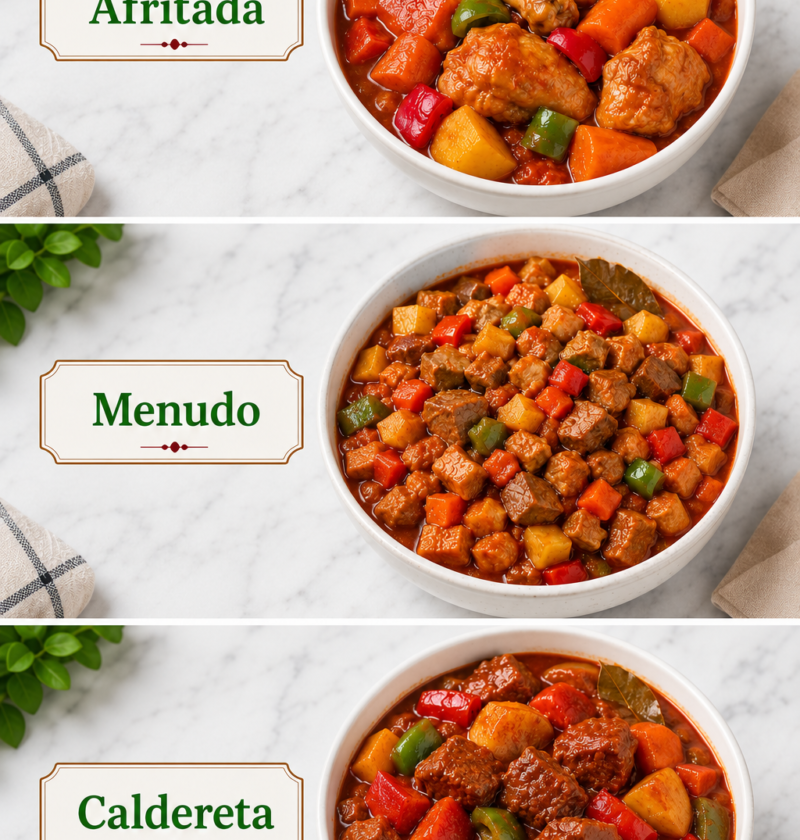
Filipino cuisine is filled with comforting dishes that tell stories of family, tradition, and shared meals. Among these beloved dishes, Menudo, Caldereta, and Afritada stand out as three classic Filipino stews that often confuse people because of their similar appearance.
I first learned how to cook Menudo, which I found to be the most cumbersome of the three. Compared with Afritada and Caldereta, it requires more preparation because the potatoes, carrots, and meat all need to be cut into smaller, bite-sized pieces.
But once I learned how to make menudo, cooking afritada and caldereta became much easier. I immediately noticed that all three dishes follow many of the same basic steps. The ingredients may be cut differently and the type of meat may change, but the cooking process is very similar. Learning menudo first gave me the confidence to understand and cook the other two.
They all feature a rich tomato-based sauce, colorful vegetables, and a delicious combination of savory flavors. At first glance, they may look like variations of the same dish—and in many ways, they are. I like to call them the “Filipino Tomato Threesome” because they are like three siblings from the same family: they share the same roots, but each has its own personality.
Once you learn how to cook one of them, especially Afritada, the other two become much easier to understand.
The Common Bond: A Tomato-Based Filipino Tradition
Menudo, Caldereta, and Afritada all reflect the Spanish influence on Filipino cooking. During the Spanish colonial period, Filipinos adopted ingredients and cooking techniques such as tomato sauces, stewing methods, and the use of European-style vegetables like potatoes and carrots.
Master any one of these, Afritada, Menudo or Caldereta, and you are already halfway to mastering all three. That is the beauty of Filipino cooking—once you learn the foundation, a whole world of flavors opens up.
Over time, Filipinos made these dishes their own by adjusting flavors to match local ingredients and preferences. The result was not simply Spanish-inspired food—it became uniquely Filipino.
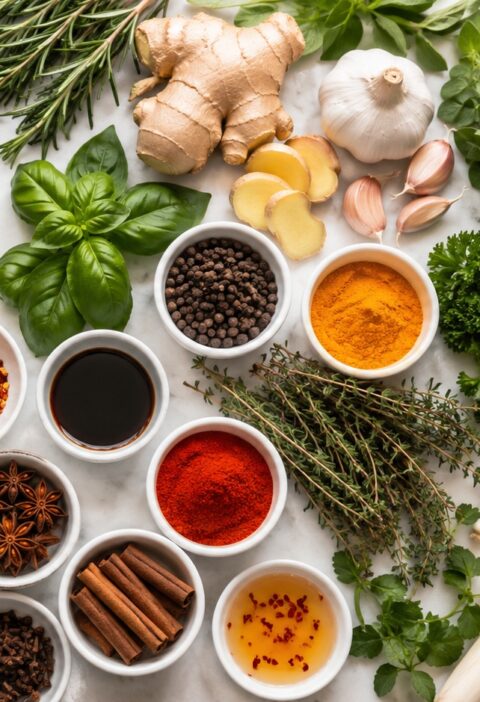
The three dishes commonly share:
- Tomato sauce
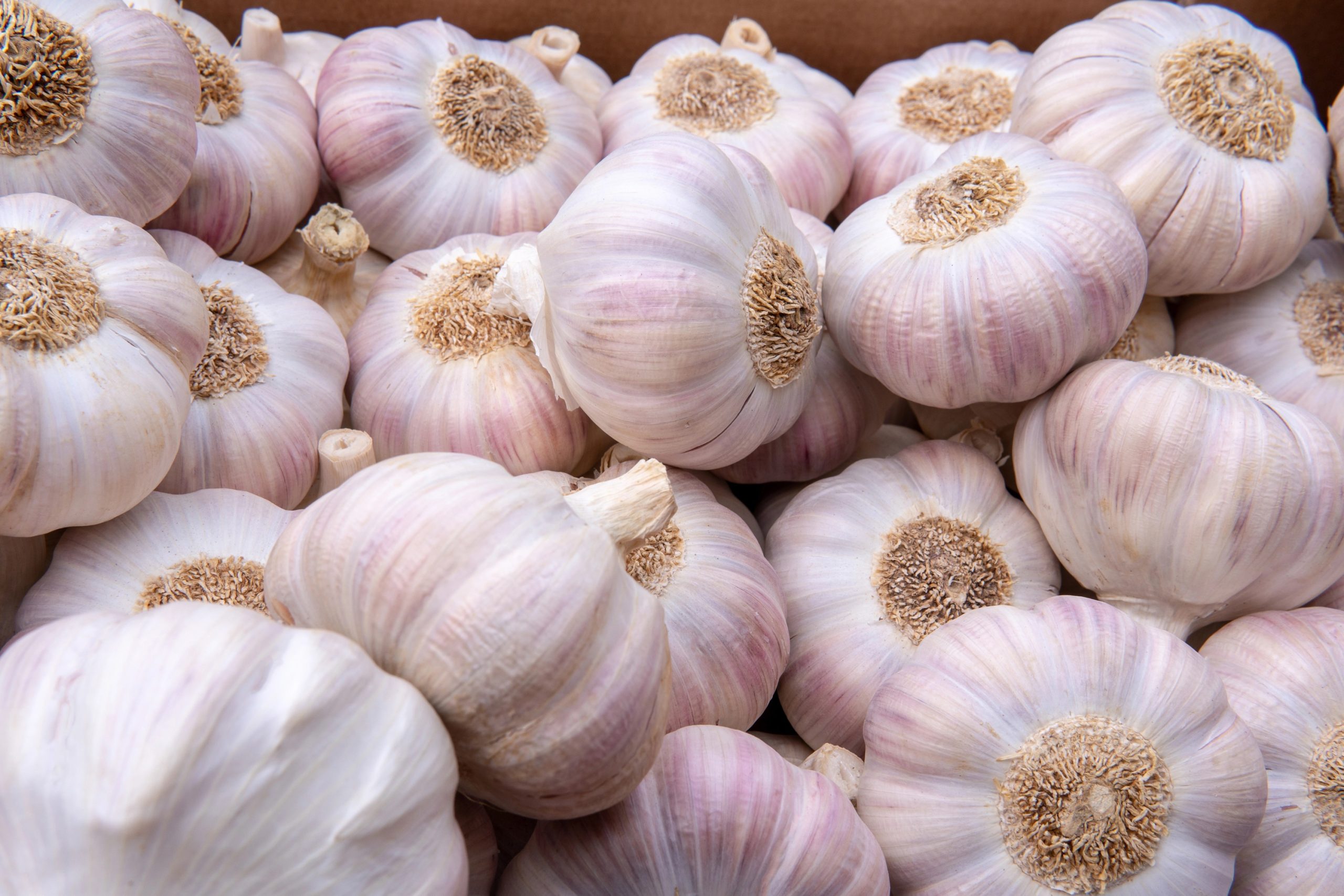
- Garlic
- Onion
- Potatoes
- Carrots
- Bell peppers
- Bay leaves
- Black pepper
- Rice as the perfect partner
The magic happens when the meat and special ingredients change.
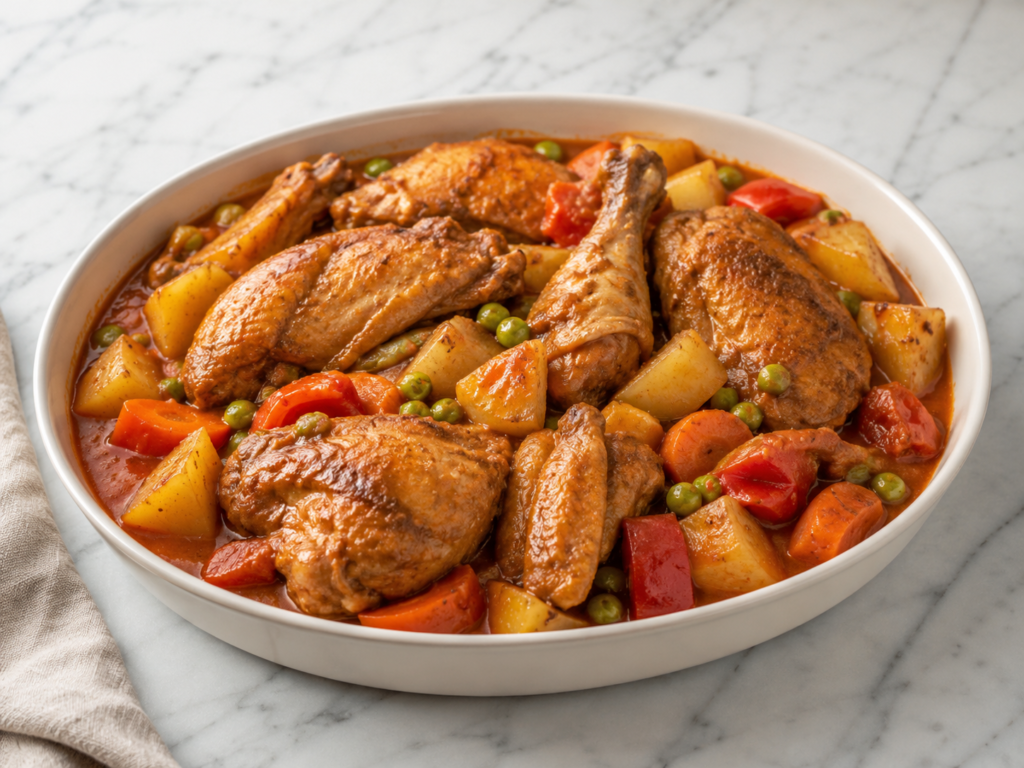
Afritada: The Beginner-Friendly Tomato Stew
Among the three, Afritada is often the easiest place to start. It is simple, comforting, and perfect for everyday Filipino meals.
Traditional Afritada uses chicken, although pork versions also exist. The chicken is usually browned first to add flavor, then simmered in tomato sauce with potatoes, carrots, and bell peppers until tender.
The flavor is mild, slightly sweet, and savory. Unlike Caldereta, it usually does not have strong spices or rich additions like liver spread. Unlike Menudo, it does not rely on liver or small diced meat pieces for its identity.

Afritada is the dish that welcomes beginners into Filipino cooking. Once you understand how to balance the tomato sauce, seasonings, and vegetables, you already have the foundation for making the other two dishes.
Menudo: The Pork and Liver Classic
Menudo is perhaps one of the most recognizable Filipino tomato-based dishes, especially at family gatherings and celebrations.
The traditional version uses pork, usually cut into small cubes. What makes Menudo unique is the addition of pork liver, which gives the sauce a deeper and richer flavor.
Many Filipino families also add their own twist. Some versions include:
- Hotdog slices
- Raisins
- Green peas
- Bell peppers
- Quail eggs
These additions create a balance of savory, slightly sweet, and rich flavors.
Compared to Afritada, Menudo is usually cut into smaller pieces. The name itself comes from the Spanish word menudo, which means “small” or “minute,” referring to the small cuts of meat.
Caldereta: The Rich Celebration Stew
If Afritada is the everyday family meal and Menudo is the classic gathering dish, Caldereta is often considered the more luxurious member of the Tomato Threesome.
Caldereta traditionally uses beef, especially tougher cuts that become tender after slow cooking.
The name comes from the Spanish word caldera, meaning “cauldron,” referring to the large pot used for cooking stews.
What makes Caldereta different is its richer and more complex flavor. Many Filipino versions include:
- Liver spread
- Cheese
- Chili peppers
- Olives
- Peanut butter (in some regional versions)
The long cooking process allows the beef to become tender while the sauce develops a deep, hearty taste.
The Tomato Threesome Recipe Comparison
| Dish | Main Meat | Signature Ingredient | Personality |
|---|---|---|---|
| Afritada | Chicken | Tomato sauce with potatoes and carrots | Simple, comforting, everyday meal |
| Menudo | Pork and liver | Liver, small meat cubes, optional raisins or hot dogs | Traditional, festive, family favorite |
| Caldereta | Beef | Liver spread, cheese, or chili | Rich, bold, celebration-worthy |
Why Learning Afritada Makes Cooking Menudo and Caldereta Easier
Cooking these three dishes is like learning different songs that use the same melody. The foundation stays the same:
- Brown the meat to build flavor.
- Sauté garlic and onions.
- Add tomato sauce and seasonings.
- Simmer until the meat becomes tender.
- Add vegetables at the right time so they keep their texture.
Once you understand this basic technique, changing from chicken to pork or beef becomes much easier.
The biggest adjustments are:
- Cooking time: Beef takes longer than chicken.
- Flavor intensity: Caldereta usually needs stronger seasoning because of the beef.
- Special ingredients: Menudo needs liver, while Caldereta often needs richer additions.
Final Thoughts: Three Dishes, One Filipino Heritage
The Filipino Tomato threesome proves that great cooking does not always require complicated techniques. Sometimes, a few simple ingredients combined with the right cooking method can create dishes that become family traditions.
Afritada, Menudo, and Caldereta may look like close relatives, but each one tells its own story. Afritada brings comfort, Menudo brings nostalgia, and Caldereta brings celebration.