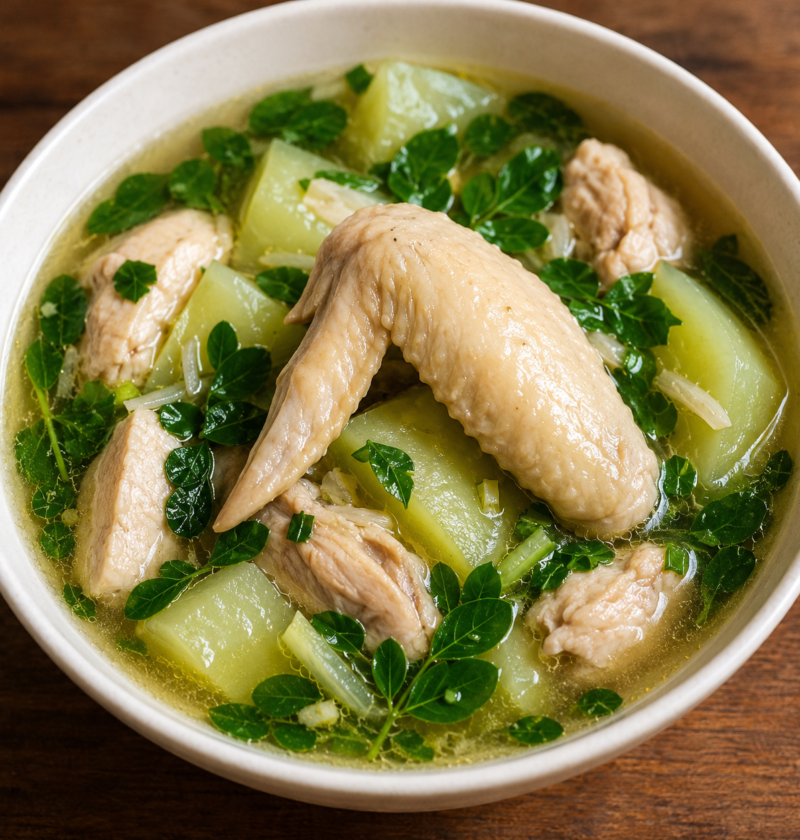
One of my favorite recipes. I remember having this dish every weekend in my Grandma’s house. My grandmother raised chickens in her backyard. Whenever she made Chicken Tinola, she would simply choose one, prepare it fresh, and cook it the same day.
She never let anything go to waste, adding the liver, gizzard, and even fresh chicken blood to the soup. Those extra ingredients gave the broth a deeper, richer flavor that made her Tinola truly unforgettable.
Tinola is deeply rooted in Filipino culture. It’s so easy to prepare as long as you have chicken and ginger; you’re good to go.
Chicken Tinola is famously mentioned in José Rizal’s novel Noli Me Tangere. During a dinner scene, the character Crisóstomo Ibarra is served the chicken neck and wing—pieces that carried social meaning at the time. This literary reference highlights how deeply rooted Tinola is in Filipino culture and history.
Alternative Ingredient
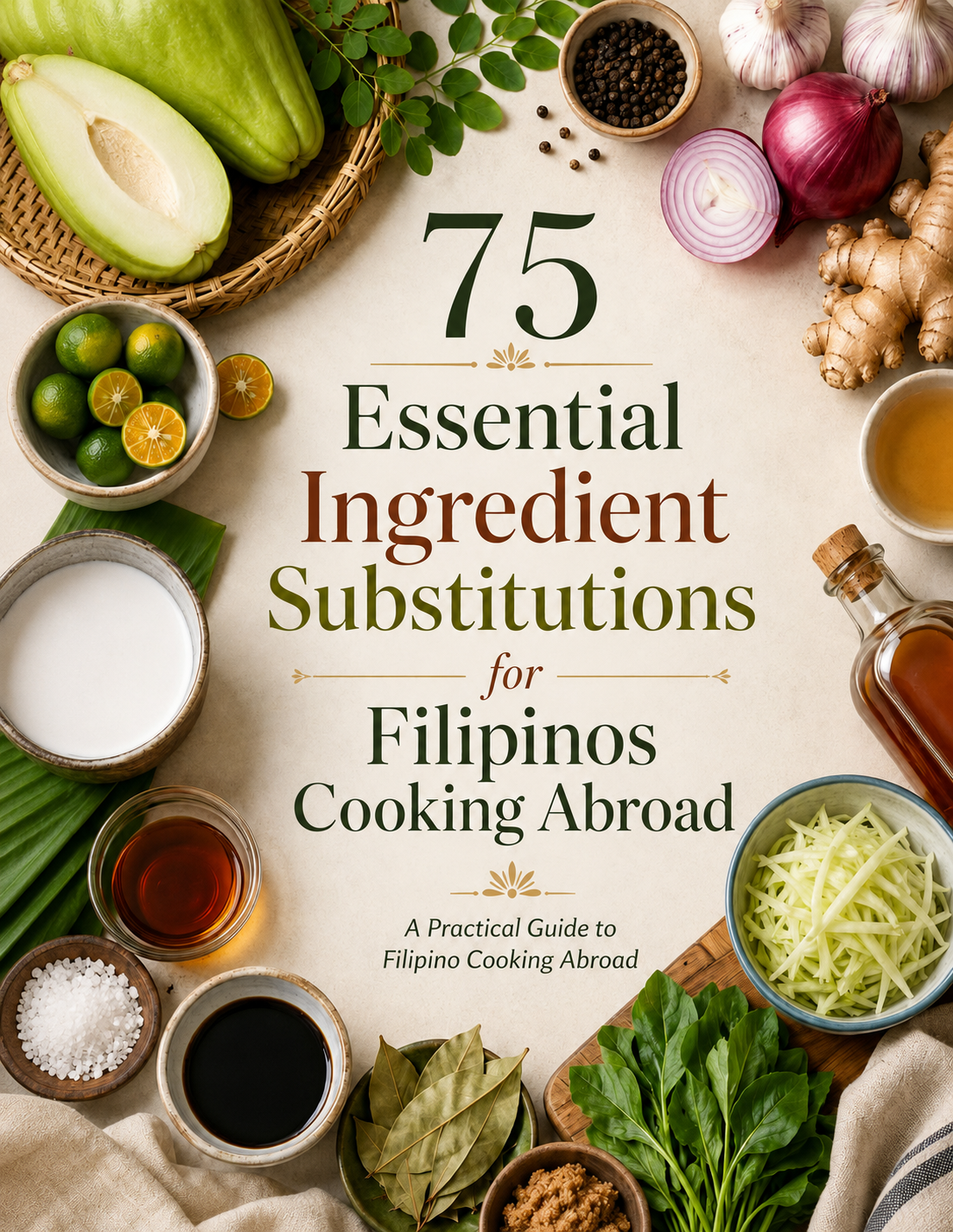
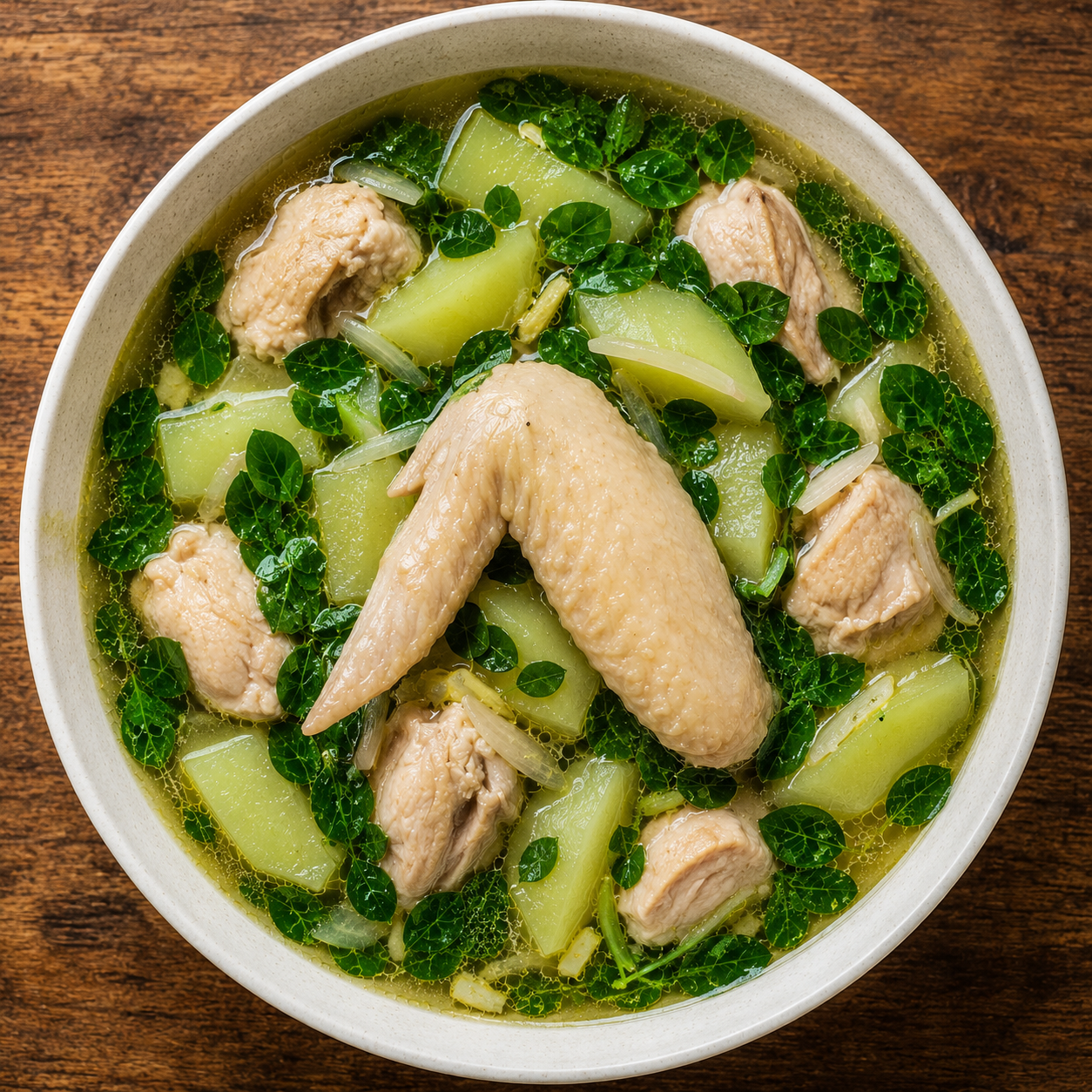
Depending on the region, basically, tinola’s vegetables are malunggay, chili leaves (talbos ng sili), and green (unripe) papaya. If malunggay or chili leaves are not available in your area, you can use pechay, bokchoi, spinach, or napa cabbage.
Alternatively, if green papaya is not available, you may use chayote or bottle gourd (upo). You may also try potato. Personally, I don’t like papaya, so I omit it unless other people who are going to eat it like it. Remember, cooking isn’t an exact science. Feel free to adjust the ingredients and seasonings to suit your taste and use whatever works best with what you have on hand.
For the best flavor, use a combination of bony chicken pieces (especially wings), liver, gizzard, and chicken blood to create a rich, savory broth.
Ingredients
Instructions
- Heat the oil in a large pot over medium heat. Add garlic and ginger. Saute the garlic until golden brown.
- Add onions, sauté the onion until softened.
- Add the chicken pieces and cook for 5–7 minutes, turning occasionally until lightly browned.
- Pour in the fish sauce and cook for another minute while stir-frying.
- Add the chicken broth or water. Bring to a boil, then reduce the heat to low. Cover and simmer for 25 minutes, or until the chicken is tender.
- Add the sliced green papaya and cook for 8–10 minutes, or until just tender.
- Stir in the malunggay leaves and cook for 1–2 minutes until wilted.
- Season with black pepper and adjust the salt or fish sauce to taste.
- Add msg, avoid if allergic to it.
- Serve hot with steamed rice.
Notes
Cooking Tips
- Simmer gently rather than boil rapidly to keep the chicken tender and the broth clear.
- Add the malunggay at the end of cooking to preserve its vibrant color and nutrients.
- If you are using chicken stewing, you may have to use a pressure cooker or simmer it longer.
Common Problems and Solutions
- Ginger flavor is too weak: Use fresh ginger and add a few extra slices if you prefer a stronger ginger taste.
- Chicken is dry or tough: Simmer gently over low heat instead of boiling vigorously to keep the meat tender.
- Green papaya is still hard: Continue simmering for another 5–10 minutes until fork-tender.
- Green papaya became too soft: Add it later in the cooking process or cut it into larger pieces.
- Soup tastes too salty: Add more chicken broth or water, then adjust the seasoning to taste.
- Soup lacks aroma: Simmer the aromatics (garlic, onion, and ginger) for 3–5 minutes before adding the chicken. For extra fragrance, add a bruised stalk of lemongrass while the broth simmers.
- Chicken has a strong odor: Use fresh chicken and skim off any foam that rises during the first few minutes of cooking.
- Using frozen chicken: Simmer it longer or thaw it to cook faster.
- Making it ahead: Chicken Tinola tastes even better the next day as the flavors continue to develop.
- Freezing leftovers: Freeze the broth and chicken separately from the leafy greens whenever possible, then add fresh greens when reheating for the best texture.
- Flavor doesn’t taste authentic: Don’t worry—every Filipino family has its own version of Tinola. Adjust the ingredients and seasonings to suit your taste and use the best ingredients available where you live.